A concrete patio is intended to create a comfortable outdoor area for furniture, dining, entertaining, and everyday relaxation. When patio slabs begin settling, however, the surface may become uneven enough to affect furniture placement, drainage, doors, and walking areas.
Patio leveling can restore settled concrete while avoiding unnecessary demolition of slabs that remain in usable condition.
Why Concrete Patios Settle
Patios are often surrounded by landscaping, irrigation lines, roof drainage, planters, and soil that receives frequent watering.
These conditions can gradually change the ground underneath a patio.
Settlement may result from:
Poorly compacted fill soil
Erosion below slab edges
Irrigation leaks
Downspouts discharging nearby
Water collecting beneath concrete
Soil shrinkage
Improper original grading
Animal activity
Soil movement around additions
Long-term ground consolidation
As support beneath the slab decreases, one corner or an entire section may begin sinking.
Uneven Patio Slab Leveling
A patio may consist of one large slab or several sections divided by joints.
The leveling process begins by identifying which sections have moved and what surrounding elevations must remain unchanged.
Important reference points may include:
Sliding doors
French doors
Exterior thresholds
House foundations
Pool decks
Walkways
Steps
Drainage channels
Landscaping borders
Patio concrete cannot simply be made level without considering where water needs to travel.
Patio Leveling Near the House
A slab that has settled toward the building can create unwanted drainage patterns.
Instead of carrying rainfall away from the structure, the patio may allow water to collect near an exterior wall.
When appropriate, lifting settled sections can help restore a more suitable slope.
Because every home has different elevations, drainage features, and thresholds, patio leveling should be planned carefully rather than based on a universal height.
Patio Door Transition Leveling
Settlement near a sliding or exterior door can create an awkward step between the interior and patio.
Raising the exterior concrete may improve the transition, but sufficient clearance must remain below door frames, siding, stucco, and other building materials.
This is why controlled lifting is important.
The objective is to improve the patio without raising it beyond surrounding limitations.
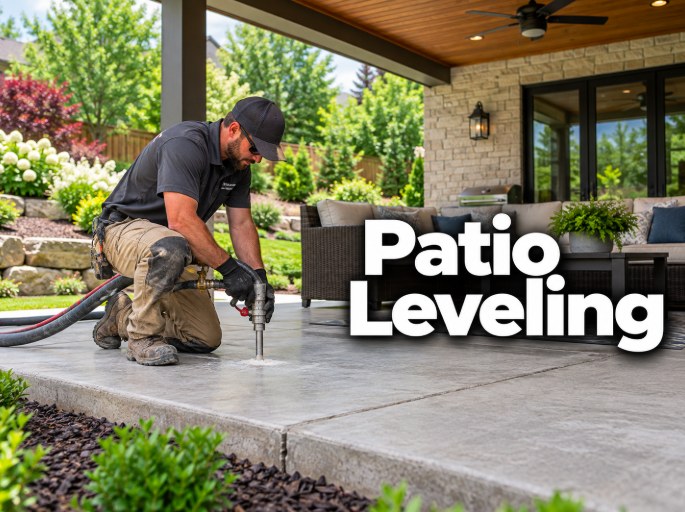
Patio Leveling by our Santa Clarita crew
Outdoor Furniture and Uneven Concrete
Tables, grills, outdoor kitchens, planters, and seating arrangements work best on a reasonably consistent surface.
Settled patio slabs can cause:
Rocking tables
Uneven chair placement
Grill instability
Water collecting beneath furniture
Awkward walking areas
Visible misalignment between concrete sections
Leveling can make the patio more practical for everyday outdoor use.
Patio Drainage Improvement
One of the most noticeable effects of patio settlement is standing water.
Low spots may remain wet long after rainfall or irrigation has stopped.
Leveling may improve drainage when the low area has been created by slab movement. However, patios with inadequate drains or fundamentally incorrect grading may require additional drainage work.
A good assessment separates a settlement problem from a broader property drainage problem.
Patio Leveling Around Covers and Posts
Some patios contain:
Aluminum covers
Wood patio covers
Pergolas
Support posts
Outdoor kitchens
Built-in barbecue islands
Railings
Screen enclosures
These features must be evaluated before concrete is moved.
The presence of attached structures may affect which slabs can be lifted and how much movement is appropriate.
Patio Leveling Versus Installing New Concrete
Removing an entire patio can disturb landscaping, walls, doors, drains, irrigation lines, and outdoor living features.
When the existing slab remains solid, leveling can be a less invasive way to correct settlement.
Replacement may still be recommended when the concrete is extensively cracked, deteriorated, or structurally unsuitable for lifting.
Patio Areas We Can Evaluate
Leveling may be appropriate for:
Backyard patios
Covered patios
Courtyard patios
Side-yard patios
Outdoor dining areas
Barbecue areas
Concrete beneath pergolas
Patio extensions
Concrete entertaining spaces
Each project is evaluated based on slab condition and surrounding construction.
Make Your Patio More Usable Again
An uneven patio can make a well-designed outdoor area feel unfinished and uncomfortable.
Concrete leveling targets the settlement itself by improving slab elevation while preserving existing concrete wherever practical.
With careful attention to drainage, door clearances, neighboring slabs, and outdoor features, a settled patio can often be brought closer to its intended position without rebuilding the entire space.
Our Patio Leveling Process
From the first visit to the final cleanup, here's how we handle patio leveling for Santa Clarita properties.
1
Measure the patio
We record elevations at doors, the house, walkways and drains to set safe target heights.
2
Plan around features
Covers, posts, kitchens and furniture areas are reviewed before deciding which slabs can move.
3
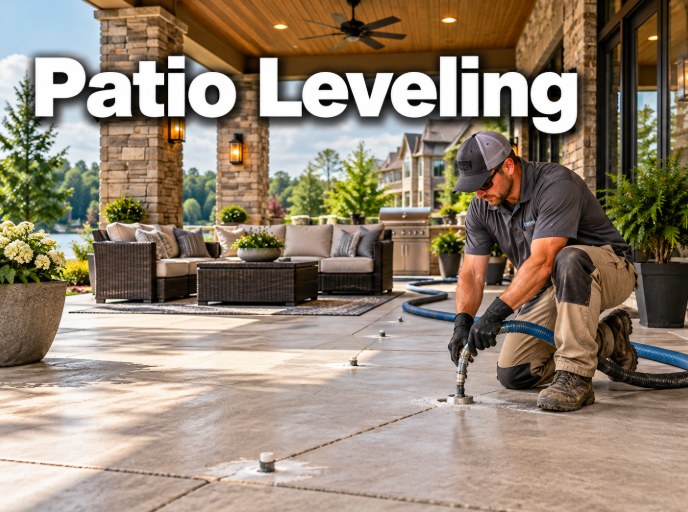
Inject and lift
Settled sections are raised gradually while we watch door clearances and slope.
4
Confirm drainage
We test that water now moves away from the house and off the patio surface.
5
Patch and clean
Ports are patched to blend in and the patio is cleaned so you can move furniture back.
Patio Leveling Cost in Santa Clarita
Patio pricing depends on the size of the patio, how many sections have moved and what surrounds them, such as doors, covers and posts.
Can you level my patio without removing the patio cover?
In most cases, yes. We evaluate the posts and attachment points before lifting and plan the work so the cover stays in place. If a slab supports a post, we limit or adjust the lift so the structure isn't stressed.
Why does water pool on my patio after watering or rain?
Low spots usually form when part of the slab has settled. Leveling can restore a better slope when settlement is the cause. If the patio was poured without enough fall or lacks drains, we'll explain what additional drainage work may help.
Can you fix the step down at my sliding door?
Often, yes. We raise the settled concrete closer to the door while leaving the required gap below the threshold, siding and stucco. That's why we measure carefully first rather than lifting to a fixed height.
Do I need to move my patio furniture?
It helps if you move lighter furniture off the slabs being lifted. If you have heavy items like planters or a built-in grill, let us know when you book and we'll plan around them during the inspection.
Is patio leveling better than pouring a new patio?
When the existing concrete is still solid, leveling is usually faster, less expensive and far less disruptive. Replacement makes more sense when the patio is badly cracked, crumbling or poorly built, and we'll tell you which applies after the inspection.
Get a Free Patio Leveling Estimate
Send us a few details and we'll schedule a free inspection at your Santa Clarita property, then give you a written price before any work begins.